
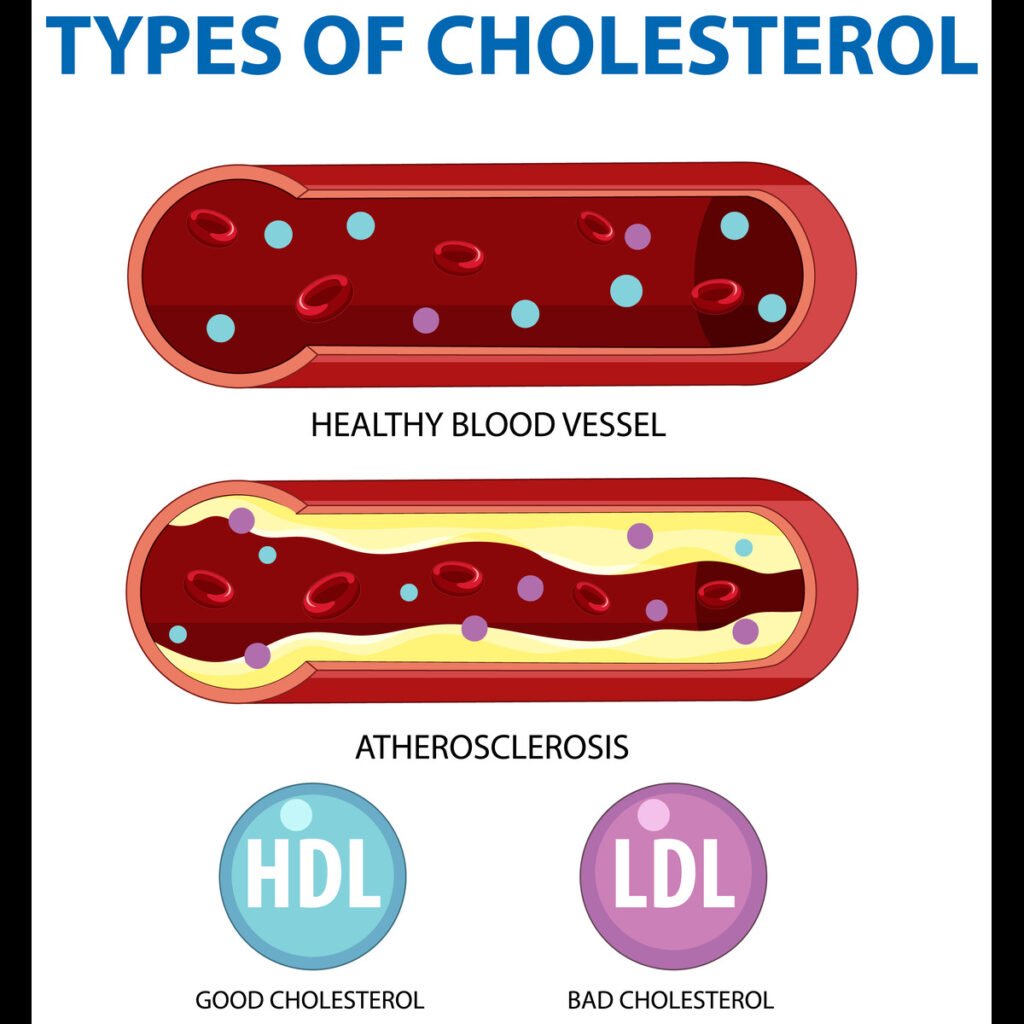
When people hear the word “cholesterol,” most think of something harmful that should be avoided at all costs. But cholesterol isn’t inherently bad. Your body needs it to function correctly. The confusion often comes from the two main types of cholesterol: LDL (Low-Density Lipoprotein) and HDL (High-Density Lipoprotein).
Understanding the roles of LDL and HDL is essential for managing your heart health. In this article, we’ll break down what these terms mean, how they affect your body, and how you can maintain a healthy cholesterol balance.
What Is Cholesterol?
Cholesterol is a waxy, fat-like substance found in every cell of the body. It helps build cell membranes, produces hormones such as estrogen and testosterone, and aids in the production of vitamin D and bile acids. While your liver makes all the cholesterol your body needs, you also get some through food, particularly animal products.
Cholesterol travels through your bloodstream in particles called lipoproteins, which come in several types. The most important are LDL and HDL.
What Is LDL Cholesterol?
LDL, or Low-Density Lipoprotein, is often labeled as the “bad” cholesterol. It carries cholesterol particles from the liver to tissues throughout the body. If too much LDL circulates in your blood, it can slowly build up on the walls of your arteries. This process is known as atherosclerosis—the hardening and narrowing of the arteries due to the buildup of plaque.
Over time, plaque can restrict blood flow or rupture, leading to serious cardiovascular events such as heart attacks and strokes.
Recommended LDL Levels
| Risk Category | Target LDL Level (mg/dL) |
|---|---|
| General Population | Less than 100 |
| Heart Disease Risk | Less than 70 |
| High-Risk Individuals | Less than 55 |
High LDL is often symptomless, so routine blood testing is essential.
Related: At What Cholesterol Level Is Medication Required?
What Is HDL Cholesterol?
HDL, or High-Density Lipoprotein, is commonly referred to as the “good” cholesterol. It helps remove excess cholesterol from your bloodstream by transporting it back to the liver, where it can be processed and eliminated from the body.
Higher HDL levels are associated with a lower risk of cardiovascular disease because HDL acts as a protective scavenger, cleaning out unwanted cholesterol from your arteries.
Recommended HDL Levels
| Group | Target HDL Level (mg/dL) |
|---|---|
| Men | Above 40 |
| Women | Above 50 |
| Ideal Range | 60 or higher |
Low HDL levels may increase your risk of heart disease, even if your total cholesterol is within normal limits.
Why the LDL to HDL Ratio Matters
Rather than focusing solely on total cholesterol, many healthcare providers evaluate the LDL-to-HDL ratio. This ratio provides a clearer picture of your cardiovascular risk by assessing the balance between harmful LDL and protective HDL.
Ideal LDL/HDL Ratio:
- Below 3.5 is generally considered optimal.
- Above 4.0 indicates a higher risk and may require intervention.
To calculate your ratio, divide your LDL number by your HDL number. For example, if your LDL is 120 and your HDL is 40, your ratio is 3.0.
How to Lower LDL and Raise HDL Naturally
Managing cholesterol often starts with lifestyle changes. Here are evidence-based methods to improve your cholesterol profile.
Ways to Lower LDL:
- Limit saturated fats: Found in red meat, butter, cheese, and other full-fat dairy products.
- Avoid trans fats, which are present in many processed and packaged foods. Check ingredient labels for “partially hydrogenated oils.”
- Increase soluble fiber: Oats, beans, lentils, apples, and flaxseed help reduce LDL absorption.
- Eat more plant sterols and stanols: These naturally occurring compounds reduce cholesterol absorption in the intestines.
- Exercise regularly: Engaging in at least 30 minutes of moderate activity most days can help lower LDL levels.
Ways to Raise HDL:
- Engage in aerobic exercise: Brisk walking, cycling, or swimming can help raise your HDL levels.
- Stop smoking: Quitting can improve HDL within weeks.
- Lose excess weight: Even modest weight loss improves HDL levels.
- Choose healthy fats: Replace saturated fats with unsaturated fats found in olive oil, nuts, and avocados.
What Role Do Triglycerides Play?
Triglycerides are another type of fat in your blood and are often tested alongside cholesterol. While they are not cholesterol, elevated triglycerides combined with low HDL or high LDL may increase your risk of heart disease.
Normal Triglyceride Levels:
| Category | Level (mg/dL) |
|---|---|
| Normal | Less than 150 |
| Borderline | 150–199 |
| High | 200–499 |
| Very High | 500 and above |
Reducing added sugar, alcohol, and refined carbohydrates can significantly improve triglyceride levels.
Related: The Breakthrough 6‑Month Cholesterol Shot: Leqvio™ (Inclisiran)
When to Get Tested
Regular cholesterol testing helps detect issues before symptoms appear.
- Adults aged 20 and older: Should get tested every 4 to 6 years if at low risk.
- Those with risk factors: Such as obesity, diabetes, high blood pressure, or family history of heart disease, may need more frequent testing.
- After age 40: Annual testing is often recommended, especially for men and postmenopausal women.
Your healthcare provider may order a lipid panel, which includes total cholesterol, LDL, HDL, and triglycerides.
Key Takeaways
- LDL delivers cholesterol to your cells but can cause artery blockages when levels are too high.
- HDL helps clear cholesterol from your bloodstream, offering protection against heart disease.
- A balanced LDL to HDL ratio is more informative than total cholesterol alone.
- Lifestyle changes, such as adopting a healthy diet, engaging in regular exercise, and quitting smoking, are essential for maintaining healthy cholesterol levels.
Monitoring your cholesterol and understanding its significance is one of the most effective ways to reduce your risk of cardiovascular disease. If your levels are outside the recommended range, work with your healthcare provider to create a personalized plan that includes lifestyle changes and, if necessary, medication.