

Cholesterol plays a vital role in the body, but when levels climb too high, it becomes a significant risk factor for heart attacks, strokes, and other cardiovascular diseases. The question that often arises is: At what cholesterol level is medication required? The answer isn’t one-size-fits-all—it depends on your LDL (bad cholesterol), HDL (good cholesterol), triglycerides, and most importantly, your risk profile.
In this comprehensive guide, we’ll explore cholesterol thresholds, when medication becomes necessary, and how decisions are made based on current clinical guidelines and personal risk factors.
Understanding Cholesterol: HDL, LDL, and Total Cholesterol
Cholesterol is a waxy, fat-like substance found in every cell of the body. It’s necessary for the production of hormones, vitamin D, and substances that help you digest food. However, excess cholesterol in the blood can form plaques in the arteries, restricting blood flow and increasing the risk of heart disease.
Here are the main types of cholesterol measured in a standard lipid panel:
- LDL (Low-Density Lipoprotein) – Often called “bad” cholesterol; high levels can clog arteries.
- HDL (High-Density Lipoprotein) – Known as “good” cholesterol; helps remove excess cholesterol.
- Triglycerides – A type of fat in the blood; high levels may also raise heart disease risk.
- Total Cholesterol – The sum of HDL, LDL, and a portion of triglycerides.
Each component provides insight into your cardiovascular health, and medication decisions depend on a combination of these values.
Related: The Ultimate Guide to Managing Cholesterol for a Healthy Heart
Cholesterol Levels: What’s Normal and What’s Not
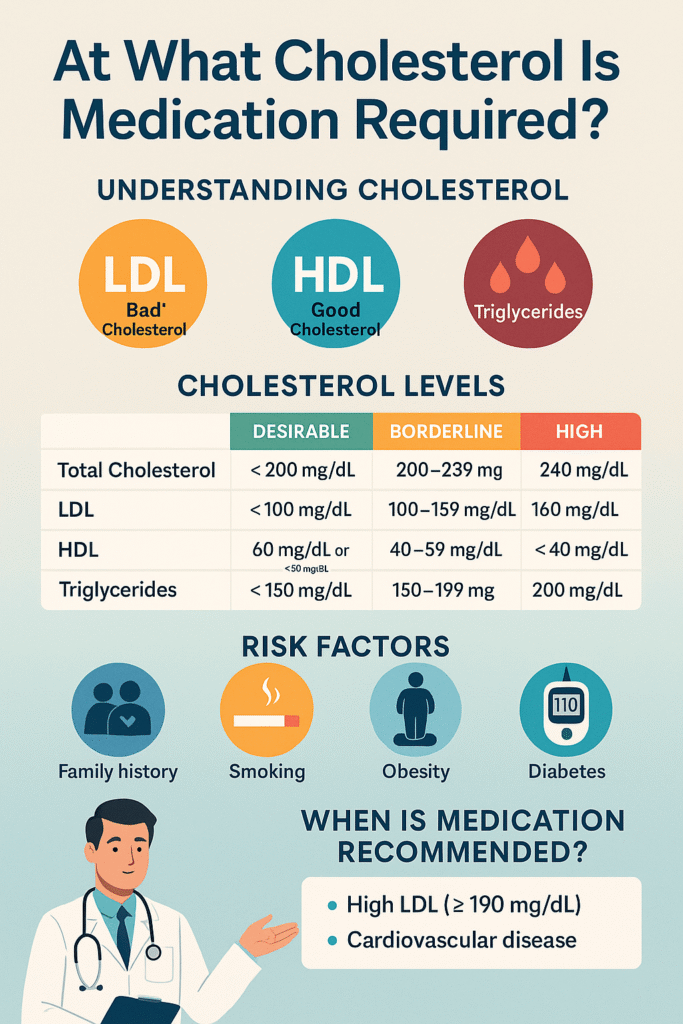
Understanding your cholesterol numbers is crucial. Let’s take a look at the standard values used by doctors to assess whether your levels fall into a healthy or high-risk category.
| Component | Desirable Range | Borderline | High Risk |
| Total Cholesterol | Less than 200 mg/dL | 200–239 mg/dL | 240 mg/dL and above |
| LDL (Bad) | Less than 100 mg/dL | 100–159 mg/dL | 160 mg/dL and above |
| HDL (Good) | 60 mg/dL or higher | 40–59 mg/dL (men)50–59 mg/dL (women) | Less than 40 mg/dL (men)50 mg/dL (women) |
| Triglycerides | Less than 150 mg/dL | 150–199 mg/dL | 200 mg/dL and above |
Risk Factors That Influence Treatment Decisions
Cholesterol numbers are only part of the picture. Doctors also consider your overall risk of heart disease or stroke. Even moderately high LDL might not require medication unless combined with other risk factors, such as:
- Smoking
- High blood pressure
- Obesity
- Family history of early heart disease
- Diabetes or insulin resistance
- Age over 45 for men and 55 for women
To estimate this risk, physicians often use tools like the ASCVD Risk Calculator, which predicts your 10-year chance of a cardiovascular event.
When Is Medication for Cholesterol Recommended?
According to the American Heart Association (AHA) and American College of Cardiology (ACC), medication is typically recommended in the following scenarios:
1. Adults Without Cardiovascular Disease (Primary Prevention)
- LDL ≥ 190 mg/dL – High enough to warrant immediate statin therapy, even without other risk factors.
- LDL 70–189 mg/dL + 10-year ASCVD risk ≥ 7.5% – Statins are advised for moderate- to high-risk individuals.
- People with diabetes aged 40–75 with LDL ≥ 70 mg/dL – Statins recommended, regardless of ASCVD score.
2. Adults With Cardiovascular Disease (Secondary Prevention)
Anyone with a history of heart attack, stroke, or arterial blockages typically requires cholesterol-lowering medication regardless of LDL level, aiming for LDL < 70 mg/dL, or even lower in some cases.
Types of Cholesterol Medications
When lifestyle changes alone aren’t enough to bring cholesterol into a safe range, doctors may prescribe one or more of the following medications:
1. Statins
Statins are the most commonly prescribed cholesterol-lowering drugs. They work by inhibiting an enzyme (HMG-CoA reductase) in the liver responsible for producing cholesterol. As a result, the liver pulls more LDL from the blood, effectively reducing total cholesterol levels.
- Common statins: Atorvastatin, Rosuvastatin, Simvastatin, Pravastatin
- Benefits: Proven to reduce heart attack and stroke risk by 25–35%
- Side effects: Muscle pain, elevated liver enzymes, and (rarely) increased risk of diabetes
2. PCSK9 Inhibitors
These are injectable medications that target a protein called PCSK9, allowing the liver to remove more LDL from the bloodstream. They are instrumental in patients with familial hypercholesterolemia or those who can’t tolerate statins.
- Common drugs: Evolocumab (Repatha), Alirocumab (Praluent)
- LDL-C reduction: Up to 60%
- Dosing: Biweekly or monthly injections
3. Ezetimibe
This oral medication works by preventing the absorption of cholesterol in the small intestine. It’s often used in combination with statins when additional LDL lowering is needed.
4. Bile Acid Sequestrants
These bind to bile in the intestines, preventing its reabsorption. Since bile is made from cholesterol, the liver must use more cholesterol to make new bile, which lowers LDL levels.
- Drugs include: Cholestyramine, Colestipol.
Related: The Breakthrough 6‑Month Cholesterol Shot: Leqvio™ (Inclisiran)
Role of Lifestyle Before Medication Is Prescribed
Before starting medication, many doctors recommend a trial of lifestyle changes for 3–6 months. These include:
- Heart-healthy diet: Emphasizing fruits, vegetables, whole grains, and healthy fats (like olive oil or nuts)
- Exercise: At least 150 minutes of moderate aerobic activity weekly
- Weight loss: Especially beneficial if overweight or obese
- Smoking cessation: Immediate and long-term benefits for cholesterol and overall cardiovascular health
If these efforts don’t yield significant improvement, medication may be added to the regimen.
Monitoring Cholesterol Levels Over Time
Once treatment begins—whether lifestyle-based, medical, or a combination of both—cholesterol levels are typically checked every 3–12 months. This helps:
- Evaluate medication effectiveness
- Adjust dosages
- Monitor side effects or lab abnormalities (e.g., liver function tests)
For patients on statins, doctors may also monitor creatine kinase or HbA1c in those with diabetes risk.
Side Effects and Safety Considerations of Cholesterol Medications
Cholesterol-lowering medications are generally safe but not without risks:
- Statins: May cause muscle aches, fatigue, or, in rare cases, liver damage or rhabdomyolysis.
- PCSK9 Inhibitors: Can lead to mild injection-site reactions and upper respiratory symptoms.
- Ezetimibe and bile acid sequestrants can cause gastrointestinal issues, such as bloating, constipation, or gas.
People with liver disease, pregnant or breastfeeding women, and those with statin intolerance should work closely with their healthcare provider to choose appropriate options.
Pediatric and Young Adult Considerations
High cholesterol isn’t just a problem for adults. Increasing rates of childhood obesity mean that more teens and even children may have elevated LDL levels. The American Academy of Pediatrics recommends:
- Screening: Between ages 9–11 and again at 17–21
- Lifestyle intervention first
- Medication consideration: In children over age 10 with persistent LDL ≥ 190 mg/dL or LDL ≥ 160 mg/dL with family history or other risk factors
Frequently Asked Questions (FAQs)
1. What is a dangerously high cholesterol level?
An LDL level over 190 mg/dL or a total cholesterol level over 240 mg/dL is considered high-risk and often requires immediate medical attention.
2. Can high cholesterol be reversed without medication?
In mild to moderate cases, yes, through lifestyle changes like diet, exercise, and weight loss. However, many people with genetic or high-risk profiles may still need medication.
3. Are statins safe long-term?
Yes. Long-term studies have shown that statins are safe and effective in reducing cardiovascular events. Liver function and muscle symptoms should be monitored regularly to ensure optimal health.
4. Can I stop taking cholesterol medication if my levels improve?
Not without your doctor’s guidance. Stopping medication often causes cholesterol to rise again, especially if risk factors are still present.
5. Is medication the only way to lower cholesterol?
No. Diet, exercise, quitting smoking, and stress management can all significantly help. However, medication may be necessary for some individuals.
6. What’s the difference between LDL and total cholesterol?
LDL is a component of total cholesterol, which also includes HDL and part of your triglycerides. LDL is the main target for treatment decisions.
Conclusion: Individualized Care Is Key
So, at what cholesterol level is medication required? The answer lies in both the numbers and your overall health. While general guidelines suggest an LDL level of 190 mg/dL or higher as a treatment threshold, doctors also consider age, lifestyle, existing medical conditions, and cardiovascular risk when recommending medication.
The best approach? Know your numbers, assess your risk, and work with your healthcare provider to determine whether lifestyle changes, medication, or a combination of both is necessary. Cholesterol control isn’t just about numbers—it’s about protecting your heart for life.
References
- American Heart Association. “Understanding Cholesterol.” https://www.heart.org
- 2018 ACC/AHA Guidelines on the Management of Blood Cholesterol. https://www.acc.org
- Mayo Clinic. “Cholesterol Numbers: What Do They Mean?” https://www.mayoclinic.org
- NIH MedlinePlus. “Cholesterol Levels: What You Need to Know.” https://medlineplus.gov
CDC. “LDL and HDL Cholesterol.” https://www.cdc.gov
Pingback: LDL vs HDL: What’s the Difference and Why It Matters - Health Basics Hub